

The rural employment guarantee programme was originally introduced in 2006 by the United Progressive Alliance government led by former Prime Minister Dr. Manmohan Singh as the National Rural Employment Guarantee Act. The objective was to create durable community assets such as ponds, wells, rural roads, and water conservation infrastructure while simultaneously providing livelihood opportunities to adult members of rural households. In 2009, the programme was renamed the Mahatma Gandhi National Rural Employment Guarantee Act, which the United Progressive Alliance government regarded as one of its most significant achievements.
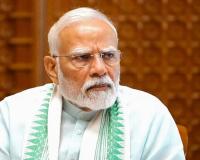
After nearly 20 years, the National Democratic Alliance government led by Prime Minister Narendra Modi has replaced the scheme with the Developed India Employment and Livelihood Mission Guarantee (Rural) Act, 2025. The new legislation has been designed in line with the national objective of achieving the Developed India 2047 vision and is presented as an upgraded version of the previous employment guarantee programme with several structural improvements.
One of the most significant changes under the new programme is the extensive use of modern technology to reduce fraud and strengthen monitoring. The scheme introduces biometric authentication, Global Positioning System-based and mobile-based worksite monitoring, proactive public disclosure mechanisms, regular audits, and Artificial Intelligence-assisted planning and fraud risk detection. These measures are intended to provide real-time monitoring of worksites, improve project tracking, enhance accountability, and prevent fraudulent practices that had been reported under the previous programme.
The employment guarantee has also been expanded. While MGNREGA assured 100 days of wage employment annually, VB G-RAM-G guarantees 125 days of employment each year, providing rural workers with an additional 25 days of assured work.
The revised legislation also increases minimum daily wages. Under MGNREGA, the average daily wage stood at Rs 298.80. Under the new programme, the minimum daily wage has been increased to Rs 327.40, representing an increase of Rs 28.60 per day. According to the Ministry of Rural Development, the revised wage rates have come into effect across all 34 states and Union Territories from July 1, 2026.
The enhanced wage structure and extended employment guarantee are expected to provide substantial financial benefits to rural workers. Earlier, workers received approximately Rs 29,880 for 100 days of employment under the previous wage rate. Under the new framework, 125 days of employment will provide approximately Rs 40,925. The additional 25 days of guaranteed employment alone increases annual earnings by about Rs 8,125, while the higher daily wage provides an additional benefit of approximately Rs 2,860 even for the first 100 days of work. Overall, the revised structure results in an estimated annual gain of about Rs 10,500 for eligible workers.
The financial structure of the programme has also undergone significant changes. The previous employment guarantee scheme was demand-driven, requiring the Central Government to provide additional funding whenever demand for work increased. Under VB G-RAM-G, standard financial allocations have been introduced, and any expenditure beyond the prescribed allocation will also require financial participation from state governments.
The cost-sharing mechanism between the Central Government and state governments has been revised as well. Under MGNREGA, the Central Government bore 100 percent of wage payments, while material costs for projects were shared in a 75:25 ratio between the Centre and the states. Although VB G-RAM-G remains a centrally sponsored programme, state governments will now bear a larger share of overall expenditure.
For Northeastern and Himalayan states, the expenditure sharing ratio between the Centre and the states has been fixed at 90:10. For all other states and Union Territories with legislatures, the cost-sharing ratio will be 60:40. Union Territories without legislatures will continue to receive 100 percent financial support from the Central Government.
Another major policy change relates to the timing of employment demand. Under the previous programme, eligible households could request employment at any time during the year. Under the new legislation, state governments will officially notify the principal agricultural sowing and harvesting seasons, during which employment requests under VB G-RAM-G will not be accepted. The provision aims to ensure that rural labour remains available for critical agricultural operations while balancing employment generation with farming requirements.
With the implementation of the Developed India Employment and Livelihood Mission Guarantee (Rural) Act, 2025, the Government has introduced the most extensive reform of India's rural employment guarantee framework since its inception. The legislation combines higher employment guarantees, increased wages, revised funding arrangements, and technology-based governance with the broader objective of strengthening rural livelihoods while supporting the national vision of Developed India by 2047.
About The Author










Comment List